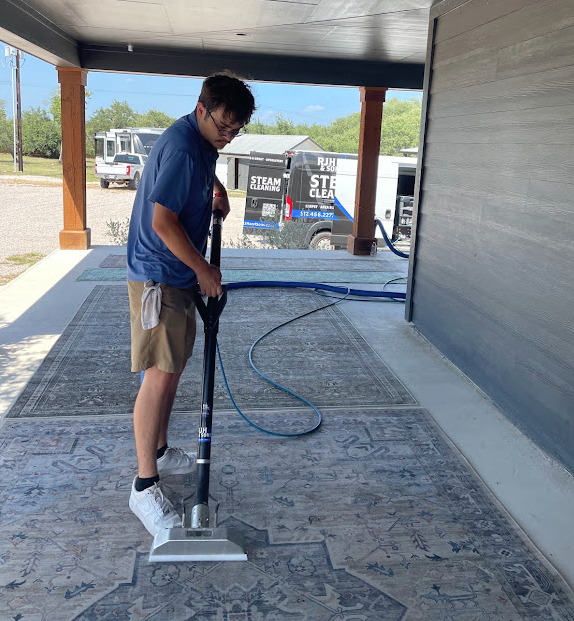
An area rug is not carpet. It's a loose textile sitting on a floor you also care about, and the fibers are often natural. That changes the whole approach.
Fiber decides the method
- Wool is durable but reacts badly to high-alkaline products — the wrong cleaner strips the lanolin and leaves it feeling like straw
- Cotton fringe browns easily if it stays wet; it needs to be treated and dried deliberately
- Jute and sisal are cellulose and can stain from their own moisture, so they get a low-moisture approach
- Synthetics take the most aggressive cleaning and dry the fastest
The dry soil comes out first
Most of what's in an old rug is dry grit sitting down near the backing, and it cuts the fibers every time someone walks across it. If that grit isn't removed before water goes in, it turns to mud. Dry soil removal is the least glamorous step and the one that most changes the result.
Protect the floor underneath
We put a barrier under the rug when we clean in place, and we don't put the pad back down until the rug is dry — trapping moisture between a rug and a wood floor is how you end up with two problems.
Not sure what your rug is made of? Send us a photo of the back when you call and we'll tell you.
Want a quote for your place?
Residential and commercial. No hidden fees, 100% satisfaction guarantee.